
Shipping Estimate
USA
- USA
- CAN
- USA
- CAN
Ships within 48 hours · Estimated delivery Jul 7 - Jul 12
 Promo Codes Available:
For Your Every Summer RSVP, with Code: SUMMER15
Description
1/24 Nissan GT-RTamiya: MADE IN JAPAN Length: 197 mm. Image shows painted and assembled kit. A New Standard for Sports Cars The GT R first made its debut in December 2007 as Nissan's "Multiperformance Supercar." Featuring a 480hp 3. 8 liter twin turbo V6 engine, dual clutch transmission, and independent transaxle 4WD system, the car is able to hit 300km h top speeds and lap the vaunted Nurburgring in about 7min 30sec. This awesome performance truly makes the GT R a
Tamiya: MADE IN JAPAN
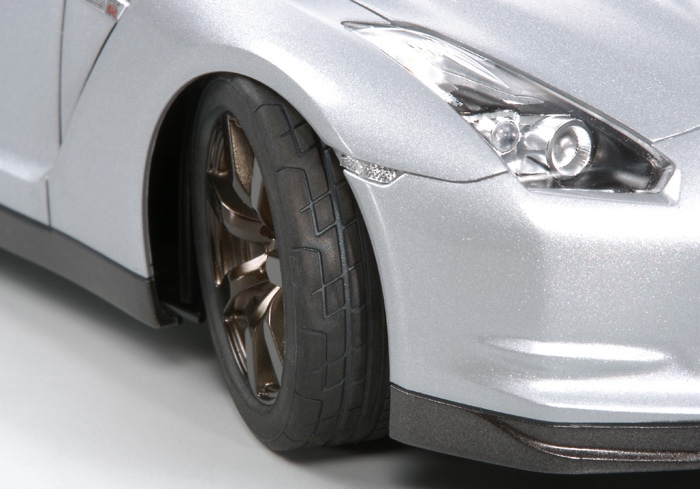
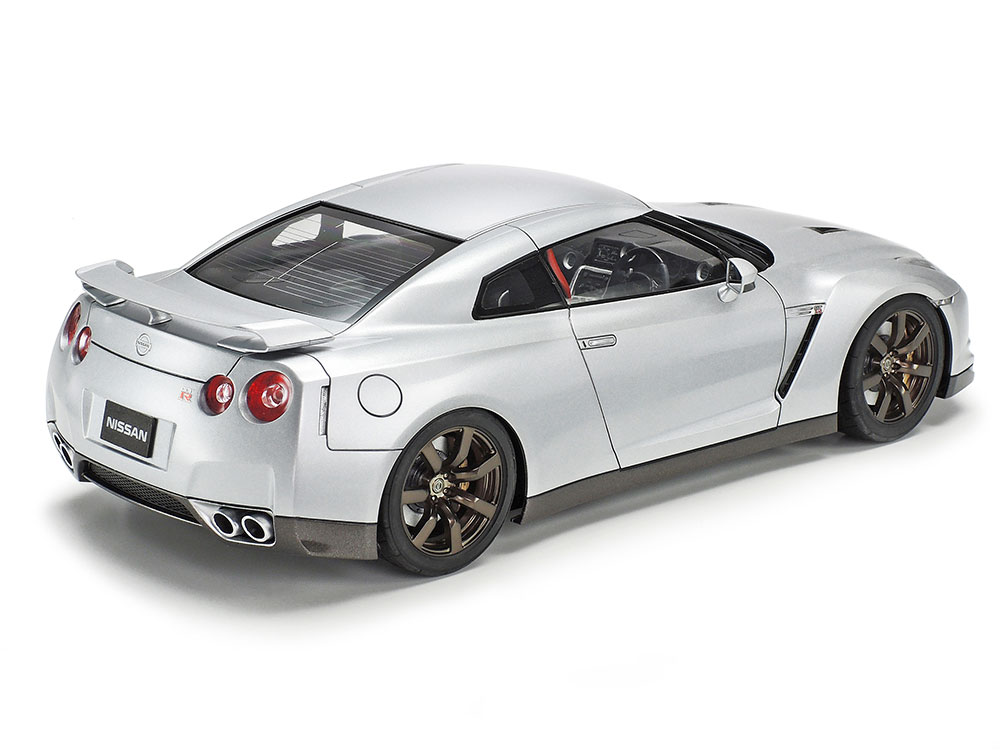
Length: 197 mm. Image shows painted and assembled kit.
【 A New Standard for Sports Cars 】 The GT-R first made its debut in December 2007 as Nissan's "Multiperformance Supercar." Featuring a 480hp 3.8 liter twin-turbo V6 engine, dual clutch transmission, and independent transaxle 4WD system, the car is able to hit 300km/h top speeds and lap the vaunted Nurburgring in about 7min 30sec. This awesome performance truly makes the GT-R a supercar that can be enjoyed by anyone, anytime, and anywhere.
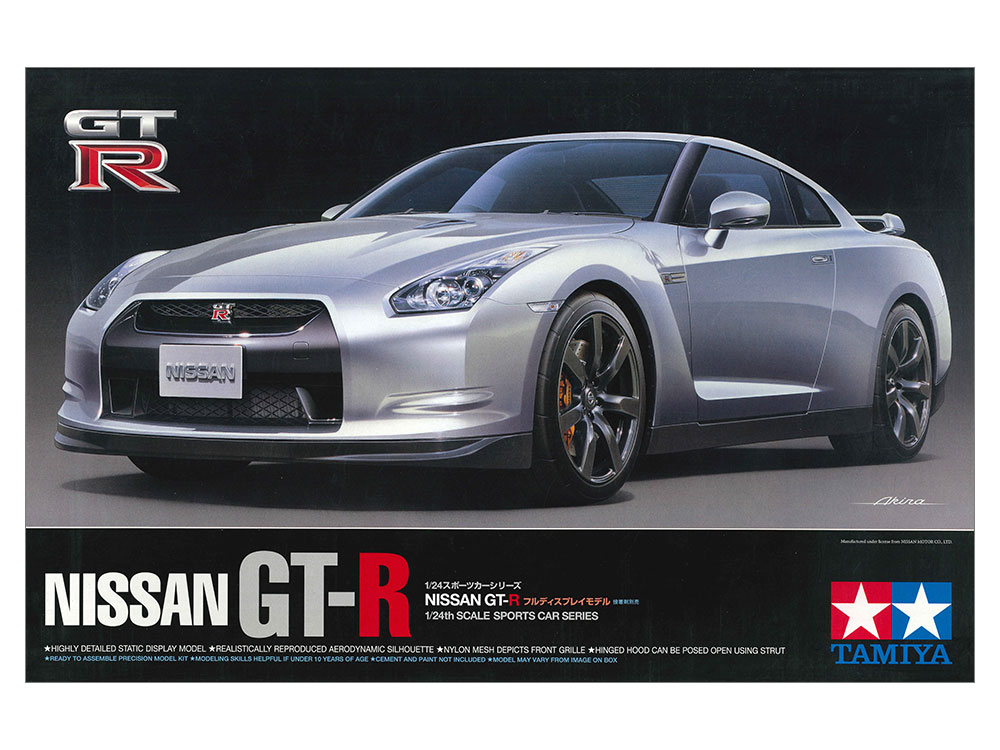
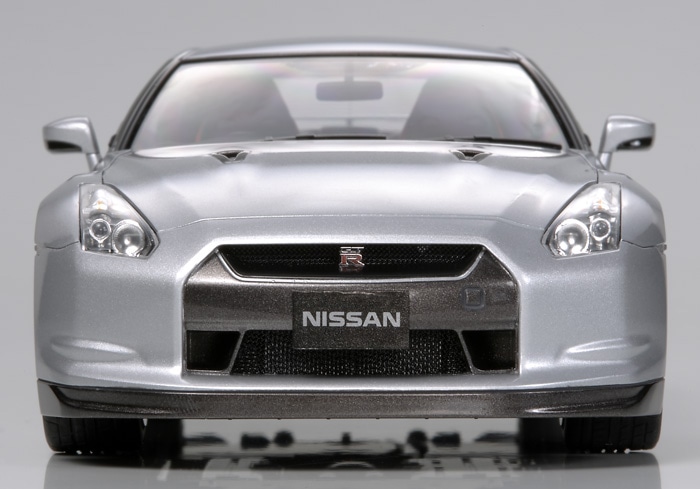
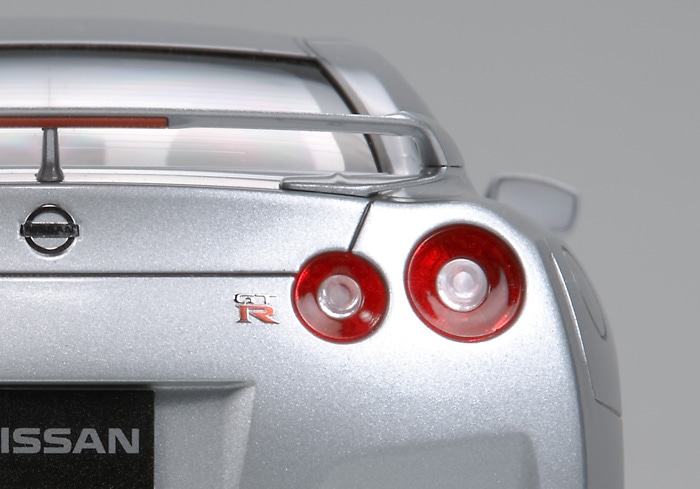
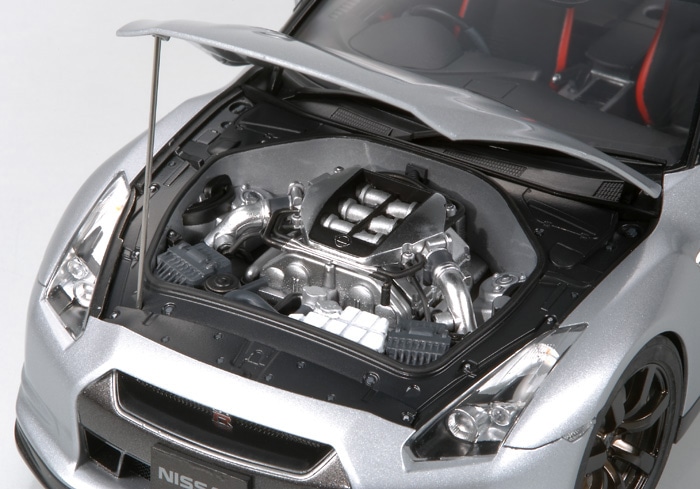
【 About the Model 】★1/24 scale high-quality assembly kit. ★Length: 197mm, Width: 82mm ★Aggressive form of the GT-R accurately captured. ★Suspension and interior components are assembled in a similar way as the actual car. ★Metal plated induction box add detail to the engine bay. ★Window masking stickers included. ★Metal transfers sharply reproduce manufacturer emblems and side mirror surfaces. ★Metal plated 2-piece wheels are just like the real thing.


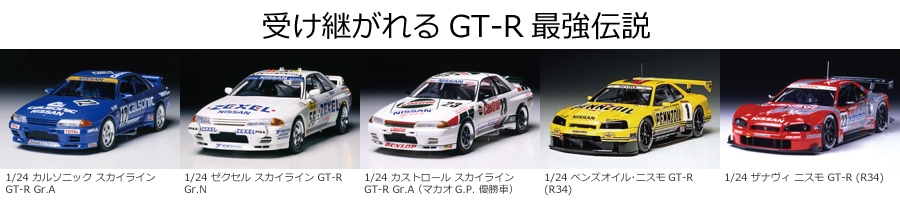
~ The Legend Begins with 50 Wins ~
At the JAF Grand Prix race in May 1969, the Nissan Skyline GT-R (PCG10), which was just released in February, made its debut in race-spec trim. At the heart of the 4-door sedan was the 2000cc S20 4-valve DOHC inline-6 cylinder engine. After winning its debut race, the car went on to dominate the podium at the Japan Grand Prix race in October. One year later, in October 1970, the high-performance 2-door hardtop (KPGC10), which was both lower and had a 70mm shorter wheelbase than the 4-door sedan became the basis from which race-spec cars were built. The car quickly ran up an impressive 49 wins, and although the Mazda Savanna (RX-7) thwarted its bid for 50 wins at the Fuji TT 500 Mile Race in December 1971, the GT-R would not be denied. Win number 50 came at the opening race of the Fuji Grand Championship Series in March of the following year. Soon afterwards, with regulations regarding vehicle emissions tightening and the oil crisis, Nissan downsized their racing activities and the GT-R disappeared from the podiums.
~ Crossing Boundaries and Categories ~
However, that was not the end of the GT-R legend. The 2nd Chapter of the story began in March 1990, at the All-Japan Touring Car Championship's opening race. The 2nd generation BNR32 was the first car in 16 years to bear the GT-R name and had debuted in May of the previous year. Featuring a 2,600cc 4-valve DOHC twin-turbo inline-6 cylinder engine and an electronic 4WD system, the car was designed to conquer the Group A class. The R32 GT-R, decked out in Calsonic colors, breezed to a pole-to-finish win, lapping all other cars and cutting 2 seconds from the course record while doing so for a dominant performance. Later that year, another GT-R with Reebok livery was entered, and together the two GT-Rs claimed pole-to-finish wins at all six races. GT-Rs continued to outclass all rivals, and by the end of the 1993 All-Japan Touring Car Championship season, the car had racked up 29 straight victories. The GT-R was also quite successful abroad, with a Castrol Skyline GT-R winning the Group A category at the Macau Grand Prix in November 1990. Other GT-Rs swept the FISA N-class podium at the Spa-Francochamps 24 Hour race in July 1990, and a Nissan works machine in Zexel colors took the first overall win for a Japanese car there the following year. The 2nd generation R32 GT-R continued to evolve, and was followed by the BCNR33 in January 1995 and the BNR34 in January 1999. Racing success also continued as the car took part in the All-Japan GT Championships from 1994. A Calsonic Skyline (R32) took the championship 2 years in a row, the Pennzoil GT-R (R33/R34) won it in 1998 and 1999, and the Xanavi NISMO GT-R won in 2003. GT-R production ended in 2004, and race teams continued on with the Fairlady Z. However, many private teams still used the GT-R in the N1 endurance race class, a class which allowed less modifications and where a street-spec car can really shine. From 1992 to 1995, the GT-R won every single race, and the streak continued to the Super Taikyu race series that began in 1998, with a final tally of an amazing 90 consecutive race wins.
~ The Beginning of a New Legend ~
Then in December 2007, a new GT-R was born after 5 years. The Skylines up to that point were all highly-tuned machines, but the new car dispensed with the Skyline name and featured custom designed chassis and engine. This 3rd generation GT-R has already stamped its authority on the race track with a 1-2 finish at the Super GT 2008 season's opening race at Suzuka and another 1-2 finish at Round 2 Okayama, ensuring that the 3rd Chapter of the GT-R's legend will begin vibrantly.
At the JAF Grand Prix race in May 1969, the Nissan Skyline GT-R (PCG10), which was just released in February, made its debut in race-spec trim. At the heart of the 4-door sedan was the 2000cc S20 4-valve DOHC inline-6 cylinder engine. After winning its debut race, the car went on to dominate the podium at the Japan Grand Prix race in October. One year later, in October 1970, the high-performance 2-door hardtop (KPGC10), which was both lower and had a 70mm shorter wheelbase than the 4-door sedan became the basis from which race-spec cars were built. The car quickly ran up an impressive 49 wins, and although the Mazda Savanna (RX-7) thwarted its bid for 50 wins at the Fuji TT 500 Mile Race in December 1971, the GT-R would not be denied. Win number 50 came at the opening race of the Fuji Grand Championship Series in March of the following year. Soon afterwards, with regulations regarding vehicle emissions tightening and the oil crisis, Nissan downsized their racing activities and the GT-R disappeared from the podiums.
~ Crossing Boundaries and Categories ~
However, that was not the end of the GT-R legend. The 2nd Chapter of the story began in March 1990, at the All-Japan Touring Car Championship's opening race. The 2nd generation BNR32 was the first car in 16 years to bear the GT-R name and had debuted in May of the previous year. Featuring a 2,600cc 4-valve DOHC twin-turbo inline-6 cylinder engine and an electronic 4WD system, the car was designed to conquer the Group A class. The R32 GT-R, decked out in Calsonic colors, breezed to a pole-to-finish win, lapping all other cars and cutting 2 seconds from the course record while doing so for a dominant performance. Later that year, another GT-R with Reebok livery was entered, and together the two GT-Rs claimed pole-to-finish wins at all six races. GT-Rs continued to outclass all rivals, and by the end of the 1993 All-Japan Touring Car Championship season, the car had racked up 29 straight victories. The GT-R was also quite successful abroad, with a Castrol Skyline GT-R winning the Group A category at the Macau Grand Prix in November 1990. Other GT-Rs swept the FISA N-class podium at the Spa-Francochamps 24 Hour race in July 1990, and a Nissan works machine in Zexel colors took the first overall win for a Japanese car there the following year. The 2nd generation R32 GT-R continued to evolve, and was followed by the BCNR33 in January 1995 and the BNR34 in January 1999. Racing success also continued as the car took part in the All-Japan GT Championships from 1994. A Calsonic Skyline (R32) took the championship 2 years in a row, the Pennzoil GT-R (R33/R34) won it in 1998 and 1999, and the Xanavi NISMO GT-R won in 2003. GT-R production ended in 2004, and race teams continued on with the Fairlady Z. However, many private teams still used the GT-R in the N1 endurance race class, a class which allowed less modifications and where a street-spec car can really shine. From 1992 to 1995, the GT-R won every single race, and the streak continued to the Super Taikyu race series that began in 1998, with a final tally of an amazing 90 consecutive race wins.
~ The Beginning of a New Legend ~
Then in December 2007, a new GT-R was born after 5 years. The Skylines up to that point were all highly-tuned machines, but the new car dispensed with the Skyline name and featured custom designed chassis and engine. This 3rd generation GT-R has already stamped its authority on the race track with a 1-2 finish at the Super GT 2008 season's opening race at Suzuka and another 1-2 finish at Round 2 Okayama, ensuring that the 3rd Chapter of the GT-R's legend will begin vibrantly.
Shipping Notes
- Free Standard Shipping on $100+ Orders to the USA.
- Except Preorder products are shipped in 48 hours.
- Delivery to the USA:
- Standard Shipping : 3-10 business days
- If time is of the essence, please consider selecting expedited delivery for faster service.
Exchange/Return Notes
- We offer a 30-day return/exchange service after receiving.
- Final sale items are not eligible for returns or exchanges.
- To process your return/exchange, please contact us at [email protected]
- Please click here for more details>>> Return & Exchange Policy
4.7 ★★★★★
Based on 105 reviews
Sort
Product Reviews
★★★★★ 5
Everyone likes the extra outlets and spacing!
Size: 6ft, Color: Yellow
I have a livestream desk shared by a team where we have lots of equipment. We were always running out of outlets and the team had nothing but praise when I installed this 16 outlet replacement. The spacing is perfect for a variety of bricks, plugs and adapters of all sizes. It's metal construction seems very durable and it's easily to mount it solidly to the wall with the wings at each end. The power cord is sufficiently beefy and lighted switch at one end a plus. Overall, we're very happy with its design, capability and value. The extra praise for doing a simple replacement was nice too!
WAS THIS REVIEW HELPFUL?YesReportShare
Reviewed in the United States on December 21, 2025
★★★★★ 5
Heavy-Duty Power for Any Workshop or Garage
Size: 6ft, Color: Yellow
I recently upgraded my workspace with the JUNNUJ 16-Outlet Heavy Duty Power Strip, and it has completely transformed how I manage tools and electronics in my garage.
Why It Stands Out:
Ample Outlets
With 16 wide-spaced outlets, it accommodates bulky plugs, adapters, and chargers without blocking neighboring sockets. Perfect for workshops or garages where multiple tools run simultaneously.
Durable Construction
The full metal housing gives it an industrial-grade feel, and it can handle heavy-duty equipment without bending or warping. Unlike plastic strips, this one feels built to last.
Safety First
Equipped with surge protection and grounded outlets, it keeps both tools and electronics safe. I feel confident plugging in expensive power tools or charging devices without worrying about power spikes.
Practical Length
The long cord allows me to reach multiple corners of my garage without needing extension cords, reducing clutter and tripping hazards.
Professional-Grade Design
Wide-spaced, high-capacity, and metal-built — this is clearly designed for industrial or garage use, not just casual household tasks. It’s heavy-duty without being overcomplicated.
Minor Considerations:
It’s larger and heavier than standard power strips, so it needs a stable mounting spot or surface.
Price is higher than a typical household strip, but for the durability and outlet capacity, it’s worth it.
Bottom Line:
The JUNNUJ 16-Outlet Heavy Duty Power Strip is a powerhouse for garages, workshops, or any space with multiple high-demand devices. Durable, safe, and highly practical, it’s a must-have for anyone who needs reliable industrial-grade power management.
WAS THIS REVIEW HELPFUL?YesReportShare
Reviewed in the United States on November 19, 2025
★★★★★ 5
Reliable and affordable
Size: 6ft, Color: Yellow
Great electric plug extension
WAS THIS REVIEW HELPFUL?YesReportShare
Reviewed in the United States on April 13, 2026
★★★★★ 5
Works great
Size: 6ft, Color: Silver
Just what I needed for my Dept 56 Christmas display. In past years, it's been a challenge to find enough open plugs for my display. This power strip completely solved that problem. I wish I had found this sooner.
WAS THIS REVIEW HELPFUL?YesReportShare
Reviewed in the United States on April 23, 2026
★★★★★ 4
Better than expected - big office cleanup
Size: 6ft, Color: Yellow, Size: 6ft, Color: Yellow
I got this power strip because it seemed like the most plausible one available, notwithstanding the reviews which particularly complained about it being prone to overheating. I certainly didn't want to burn down my home, so I tested it pretty thoroughly before I got anywhere near installing it.
The power strip arrived exactly as claimed. It is indeed 45 inches long with sixteen outlets. The power cord is substantial-feeling, and feels like it's probably 14 AWG, or possibly #12 (Pic 1), and was the length I expected (6' in my case). The mounting brackets are sufficient to mount the power strip, but only at the ends, and they can't be concealed. This means that things don't end up as solid as one would like, and if you really care about aesthetics you'll end up being offended, but hey this is a power strip, and if you didn't have it the power cord mess would be way uglier.
The outlets themselves are spaced out well enough that there's enough room to put in fairly wide wall wart transformers, but not those which have the plug pins configured such that the transformer has to point sideways. This means that if you want to be able to fill all of the slots, you can only put one of these in, and it has to go at the right-hand end. If you locate it on the left then it covers the switch. In my case, I filled the strip up completely, with one sideways transformer at the right hand end, and I still have many more plugs which won't go, but I've at least managed to improve my cable management a fair bit.
Before I installed it, I tested it by boiling an electric kettle using the outlet which is the farthest from the switch (Pic 2). This is the most stressful way to test things, since is stresses all of the wiring and intermediate outlets before it even gets to the one I was using. The kettle draws 11.6 Amps, so about 1400W (though it's amps that actually matter). I then watched the thermal behaviour of the power strip as it worked. As can be seen the first thermograph, Pic 3, the power strip itself stayed cool, indeed barely above ambient. The power meter and power cord going to the kettle are on the right. Pic 4 shows a detail of the switch end of the power strip. The switch never heated to above 77F, which was again barely above ambient. Pic 5 shows a detail of the power meter shown in Pic 2. As can be easily seen, the power cord for the kettle warms up a bit, reaching 100F, but this is clearly the kettle's power cord and plug warming up, not the power strip itself. Pic 6 shows a detail of the unused outlets on the strip. These all warmed up a little, but never got over 83F. To me, this is negligible.
As a result of this testing, I had no problems with going ahead and installing the power strip. I knew I'd be filling the power strip, but just adding up the devices I planned to plug in (two desktops, four screens, and numerous other devices), I knew that I wouldn't need more than about 4.5 amps, so I have at least 2.6X headroom. Pic 7 shows a part of the power strip as installed - I couldn't get far enough back to show all of it. Pic 8 is a thermograph of the same, with the power strip running across the middle of the picture. The how spots on the power strip are all transformers - clearly not very efficient, but not actually more than warm, and not the power strip's fault. By contrast, the really hot items visible are a DSL router on the far right, and a VOIP phone device lower on the right. Thus, I conclude that there's nothing untoward with the power strip. Lots of the devices I use are inefficient and/or run fairly hot, but if my house burns down, it doesn't look like it's going to be because of this power strip.
All told, this product seems to be very good value for something that actually cleans up my life and has this many outlets. It exceeded my expectations, particularly since my expectations had been lowered by some of the other reviews. It would certainly have been better (for me) had it been longer and with more, and more widely-spaced, outlets, but I can't fault them for making what they made, and their claims seem to have been accurate. Still, the construction is not terribly sturdy and the mounting brackets should have been better thought out.
WAS THIS REVIEW HELPFUL?YesReportShare
Reviewed in the United States on February 2, 2026